Showing posts with label schedules. Show all posts

Dec 13, 2015

Wandering & Autism: Questions to Aid in Reducing Elopement (Part 3 of 4)

In the previous post, I discussed some general ideas for dealing with in-class elopement for a student who may leave the area, but not leave the classroom.  Today I want to take a look at strategies based on the function of the behavior for students who do try to leave the classroom. We know that wandering, bolting, and fleeing (also know as elopment) can cause stress to a those who care for individuals with autism.  Within the classroom, it may be difficult to pin-point when this behavior will occur, but here are a few things to ask yourself when you are planning a strategy to reduce, remove or react to wandering.


Function:  Eloping for attention


Questions to ask yourself:
1. Have I provided the child with a visual schedule so that they know what is expected during this time.?
2. Have I taught the child how to use the schedule?
3. Are my classroom activities well planned and does the schedule leave out unstructured moments?
4. Is the environment set up with clear visual boundaries?  
5. Did I eliminate using an open space to set up my main teaching area or is it in a cornered area to reduce elopment?
5. Did I use an in task schedule to show the child what to do during this specific activity, how many tasks there will be and when they will be finished?
6. Do I have an adult sitting near the child or keeping an eye out for the child who may possibly  elope?
7.  Is the door closed or childproofed?
8. When they elope for attention, do I respond calmly?
9. When they elope for attention, do I bring them back to the activity by holding their hand and do I eliminate using words so that they do not get my verbal attention?
10. Do I provide attention many times before the elopement so that they get the same amount of energy that elopment usually provides?  Am I successful in teaching them that staying with the group gets excitement and attention but elopement gets a hand held and no conversation?
11. When they elope for attention, am I prepared to find them, hold their hand without conversation and wait quietly (for up to 20 minutes) until they stand up?
12.  Did I create a social narrative or social story about staying with the group?

Function:  Eloping for escape. 


Questions to ask yourself:
1. Have I provided the child with a visual schedule so that they know what is expected during this time.?
2. Have I taught the child how to use the schedule?
3. Are my classroom activities well planned and does the schedule leave out unstructured moments?
4. Is the environment set up with clear visual boundaries?  
5. Did I eliminate using an open space to set up my main teaching area or is it in a cornered area to reduce elopment?
5. Did I use an in task schedule to show the child what to do during this specific activity, how many tasks there will be and when they will be finished?
6. Do I have an adult sitting near the child or keeping an eye out for the child who may possibly  elope?
7.  Is the door closed or childproofed?
8. Do I provide a small box of toys or preferred items during the lesson to encourage them to come to the area and stay in the area?  Am I ok with letting them use the toys for a while (in the area with the group, not off on their own) until they get used to the idea of sitting in that area with others?
9.  Do I give them many choices within activities to keep them engaged throughout the lesson? Am I sure the task is appropriate in relation to time expectations for sitting, and task expectations?
10. Did I teach them how to ask for a break? Did I honor their request? 
11. When they elope for escape, do I respond calmly, but quickly?

12. When they elope for escape, do I have a plan in place to notify key school staff to help locate him/her?
13. When they elope for escape, am I prepared to find them, hold their hand (without conversation) and bring them back to the work area and proceed with the work task without discussion of the elopement?
14.  Did I create a social narrative or social story about staying with the group?
15.  Did I use a token board to teach the child so that they can earn a break? For example, the "I Need a Break Cards" can provide a quick way to facilitate teaching the skill of working for a break.


Function:  Eloping to gain access to something. 


Questions to ask yourself:
1. Have I provided the child with a visual schedule so that they know what is expected during this time?
2. Have I taught the child how to use the schedule?
3. Are my classroom activities well planned and does the schedule leave out unstructured moments?
4. Is the environment set up with clear visual boundaries?  
5. Did I eliminate using an open space to set up my main teaching area or is it in a cornered area to reduce elopment?
5. Did I use an in task schedule to show the child what to do during this specific activity, how many tasks there will be and when they will be finished?
6. Do I have an adult sitting near the child or keeping an eye out for the child who may possibly  elope?
7.  Is the door closed or childproofed?
8. Did I let the child know what time they would gain access to the item or activity they want using a visual support or schedule?
9.  Did I cover or remove the item from the classroom when it is not available?
10. Did I place the access to the item on the students's individualized schedule?
11. Did I teach them how to ask for the item appropriately? Did I honor their request or show them what time it will be available? If it is not an option, did I tell them using a visual support or social story?
12. When they elope for gaining access, do I respond calmly and without words?

13. When they elope for gaining access, do I bring them back to the activity and show them their schedule so that they can begin working again?
14.  Did I use a token board to teach the child that they can earn access to their activity or item? (See an example below.)


Function:  Eloping for sensory input or to avoid sensory input.


Questions to ask yourself:
1. Have I provided the child with a visual schedule so that they know what is expected during this time.?
2. Have I taught the child how to use the schedule?
3. Are my classroom activities well planned and does the schedule leave out unstructured moments?
4. Is the environment set up with clear visual boundaries?  
5. Did I eliminate using an open space to set up my main teaching area or is it in a cornered area to reduce elopment?
5. Did I use an in-task schedule to show the child what to do during this specific activity, how many tasks there will be and when they will be finished?
6. Do I have an adult sitting near the child or keeping an eye out for the child who may possibly  elope?
7.  Is the door closed or childproofed?
8. Did I think about whether or not this activity is too loud, too busy or too overwhelming for the child?
9.  Did I cover or remove the item from the classroom when it is not available?
10. Did I place the access to the item on the student's individualized schedule?
11. Did I ask the Occupational Therapist for help?
12. When they elope for sensory input, do I respond calmly and with support?

13. When they elope for to avoid sensory input, do I respond calmly and with support?
14. When they elope for sensory reasons, do I try to provide the input they are seeking before they elope?  Have I talked to the Occupational Therapist about the possibility of a sensory diet for the student?
15. Did I teach the child how to request the sensory input they seek or how to tell others if something is bothering them?
14.  Did I use a token board to teach the child that they can earn access to their activity or item?

Jul 18, 2015

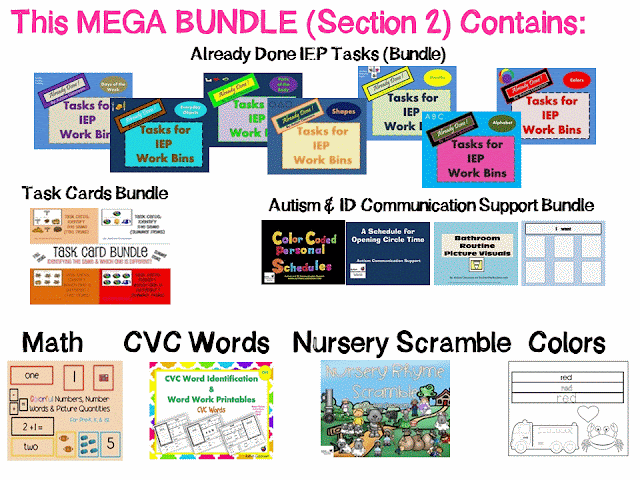
Autism and Special Education Back to School MEGA BUNDLE


Calling all planners and organizers!!!


I am so pleased to announce that it is MEGA BUNDLE time! This Autism &
Special Education Back to School MEGA bundle is a PDF compressed zip file
with 900+ pages. This product contains awesome bundles and products that can help jump start the learning for the school year for students in the early elementary years or students in special education classrooms. All of this in one easy to use product. 


It is only offered aas a mega bundle for a very limited time. After that, the items

will still be offered in the Autism Classroom Store. 


The long list of fabulous items included in the bundle:

Fine Motor Bundle Practice
Morning Work for Students with Autism BUNDLE
Match Rhyming Words Using Pictures
Teens with Autism: Matching, Sorting, Classifying and Identifying
 

Special Education & Autism Interactive Notebook – Play Skills (Part 1)
IEP Work Bin Tasks- Bundle
Same - Different Task Cards Bundle
Autism and ID Communication Support Bundle
Colorful Quantities
CVC Word Identification and Word Work Printables
My Color Book
Nursery Rhyme Scramble 


 Click to see more...
Click on the images to see more.

Nov 30, 2014

Shopping with Your Child with Autism

Shopping seems to be an important activity in the month of December.  Whether it is food shopping, toy shopping or just plain old, "I have to pick up one more thing," shopping, we all seem to do a bit more of it during this month. So what strategies can parents and family members try to use to make this experience a tiny bit easier?  What advice can teachers offer families about this subject? Here are a few...

Running Errands

  • Make a visual or written travel schedule, teach it, and use it
  • Use a photo book with various places in it
  • Use their favorite place as the last place before home
  • Have one of their favorite electronic items used only for travel
  • Reserve a special toy for time when the best behavior is needed
  • Keep snacks handy
  • Use headphones for places with large crowds
  • Crete a visual support to show where you are going and when you will be done
Many of these suggestions lean toward helping the child to understand the expectations of the activity.  They do not mean that the child will like what they are hearing.  I know that most kids complain when told of some of the errands they are running. Then they barter with their parents to include some place fun for them.  But the key is that the expectations have be explained.  This is needed as well with children with autism.  However, the plan for the day should be visual and available throughout the entire trip. 

Grocery Shopping

Grocery shopping presents it's own set of challenges. Most people have a history with certain stores and certain behaviors.  This link gives a great story with a very specific technique to try to make that experience smoother. Here are some ways to teach your child to utilize a grocery list, wait in line and handle money. Why?...Because if they can help you shop they are learning a life skill and they have something to concentrate on! Again the key to the grocery shopping might be in the pictures.  This webpage gives pictures to assist in the grocery shopping experience. Even with these ideas, you still need to start small. Don't plan a 3-hour shopping trip just because you have incorporated these techniques. 

Best Wishes!


Nov 17, 2014

Tips for Conducting Group Lessons & Fall Task Cards

Group lessons can be difficult at times in an autism classroom.  Having everyone on the same page certainly can prove to be challenging. However, there are some ideas out there that can make the task a bit more productive (notice I did not say easier).  Here are some tips: 
  • Have your materials ready in a box or bin before the lesson begins.
  • Only keep on the table the items you are discussing at the present time. Do not clutter the table with extra things.
  • Use hands on activities as much as possible.
  • Keep your materials for the lesson behind you or they may end up on the floor.
  • Use a topic board with photos or picture icons to show the students what the lesson will be about.
  • Use a topic board to review the lesson at the end. Always close out the lesson with a quick (could be only 30 seconds) review of what was discussed.
  • Remember to alternate sides when presenting to each student.  Don’t feel the need to always work from the student on the left side to the student on the right side.
  • Remember to transition the students.  Clearly let them know the lesson is finished by telling them or showing them a sign.  Also, always direct them to the next activity.

Need a quick lesson lesson that is engaging and meaningful? Oh, and not to mention timely?  If you do here are the fall themed versions of my popular identifying same and different task cards. These can be used in a group or individually. 

Task Cards-Fall Items (Identify the Same) and Task Cards- Fall Items (Which One is Different?)


Each set includes 16 fall related pictures. Each page has 4 cards. Laminate the page, cut the rectangular card and have students:
a.)Say or point to the same.

b.)Use a clothespin or paperclip to mark the correct answer.

c.)Develop a creative method to have students identify the same.


Aug 14, 2014

Setting Up the Autism Classroom: Scheduling Your School Day

Setting up the classroom can be monumental and at the same time so exciting.  It is fun to start a fresh new school year.  However, if you are new to teaching or just new to teaching students with autism, it can be kind of a daunting task to organize and set up a classroom. That’s where Autism Classroom comes in. Detailed, step-by-step information about setting up your special education classroom is in the book How to Set Up a Classroom for Students with Autism (Second Edition). The book highlights effective strategies teachers can use to create an effective classroom.  One of the top strategies which offers the most payoff is the use of schedules. 


Ebook (Instant Download)


To promote efficiency in the class, a classroom schedule should reflect most of the following: independent work time, 1:1 (or 2:1) work time, small group instruction, social skills instruction, sensory play, structured play/structured recreation-leisure opportunities, fine motor work opportunities, personal management opportunities, limited large group activities.  These are not set in stone, as each school and principal will have their own guidelines for classrooms within their school.
The first schedule I would recommend putting in place is a tentative weekly schedule.  Don’t be stubborn, write it in pencil. Chances are you will need to erase it several times before it is final.  When creating it, think of what activities you want to occur throughout the school day, which activities have to occur and when are the pre-scheduled activities such as lunch and specials. Try your best to get a good block of uninterrupted time in the morning so that you can create consistency in the student’s morning routine.  For more tips on creating a weekly schedule, see my webpage on the topic by clicking on the picture below.  

 Weekly Schedule Considerations

Here are a few schedule templates you could use to get you started thinking about what you want to accomplish during the school day. 


Once you know what activities will occur, you can make student schedules. Schedules can come in many forms. The most useful for students with autism are those schedules that are visual. This could mean written, pictures, photos or actual object representations. This schedule provides the student with picture icons they can use to see what will occur throughout the day.  It can be mounted to folder or a piece of cards stock to make it sturdy.

 Color Coded Student Schedules


This product Color Coded Personal Schedules, available at the Autism Classroom TpT Store, is an individual schedule that you can add your own picture icons or objects to. There are 9 colors. You can choose the colors you like or you can use the blank one and mount it on colored file folders. 36 Picture icons are included! These schedules can be used in the home, school and community. 


We know that organizing the day is an effective strategy for working with children with autism and related special needs. Especially for those who may have intensive needs. Additionally, making the schedule individualized to fit the student’s needs (ex. specific sensory breaks) and his/her schedule (ex. specific speech therapy or reinforcement breaks) can help with behaviors. Schedules can increase on-task behavior by giving the adult a visual tool to direct (point) the child back to. Using schedules for students with special needs offers them a way to navigate transitions a little easier by knowing what to expect next.